How OAKHEART Works
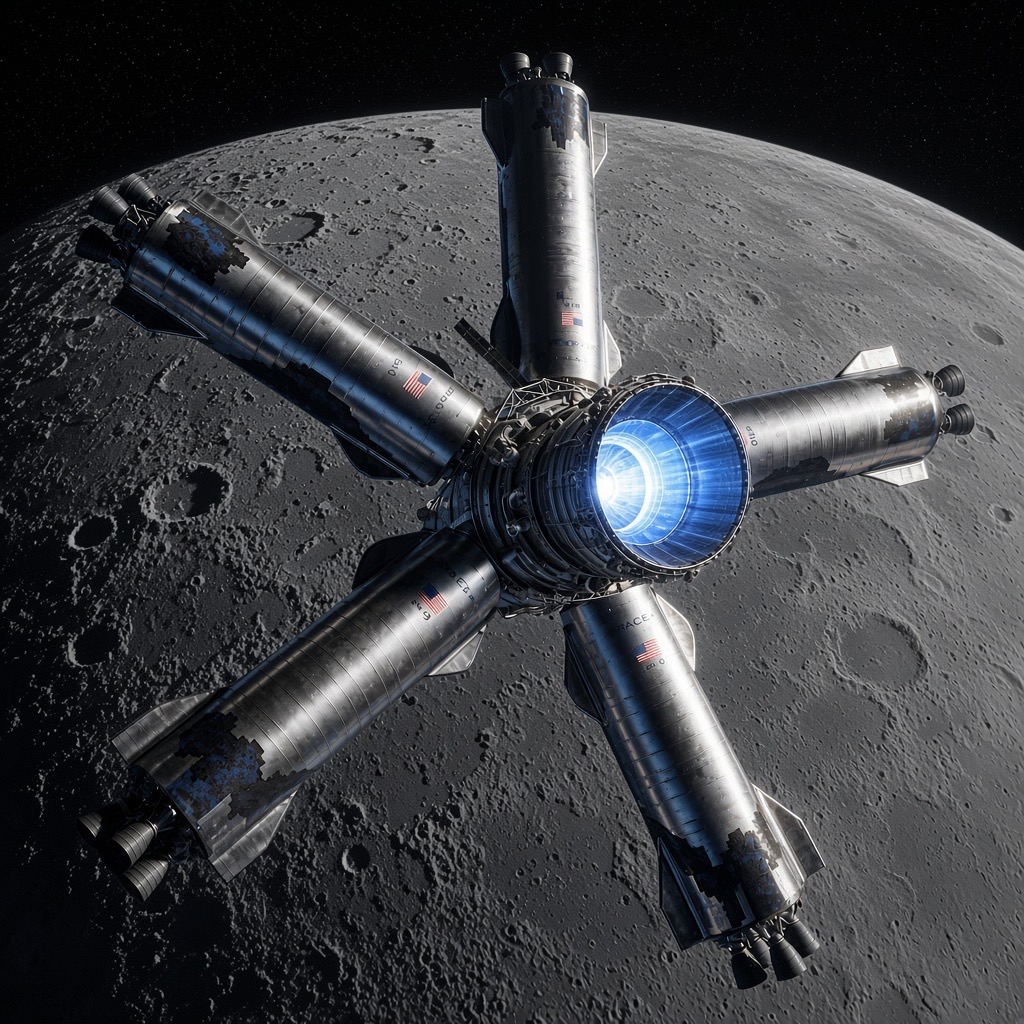
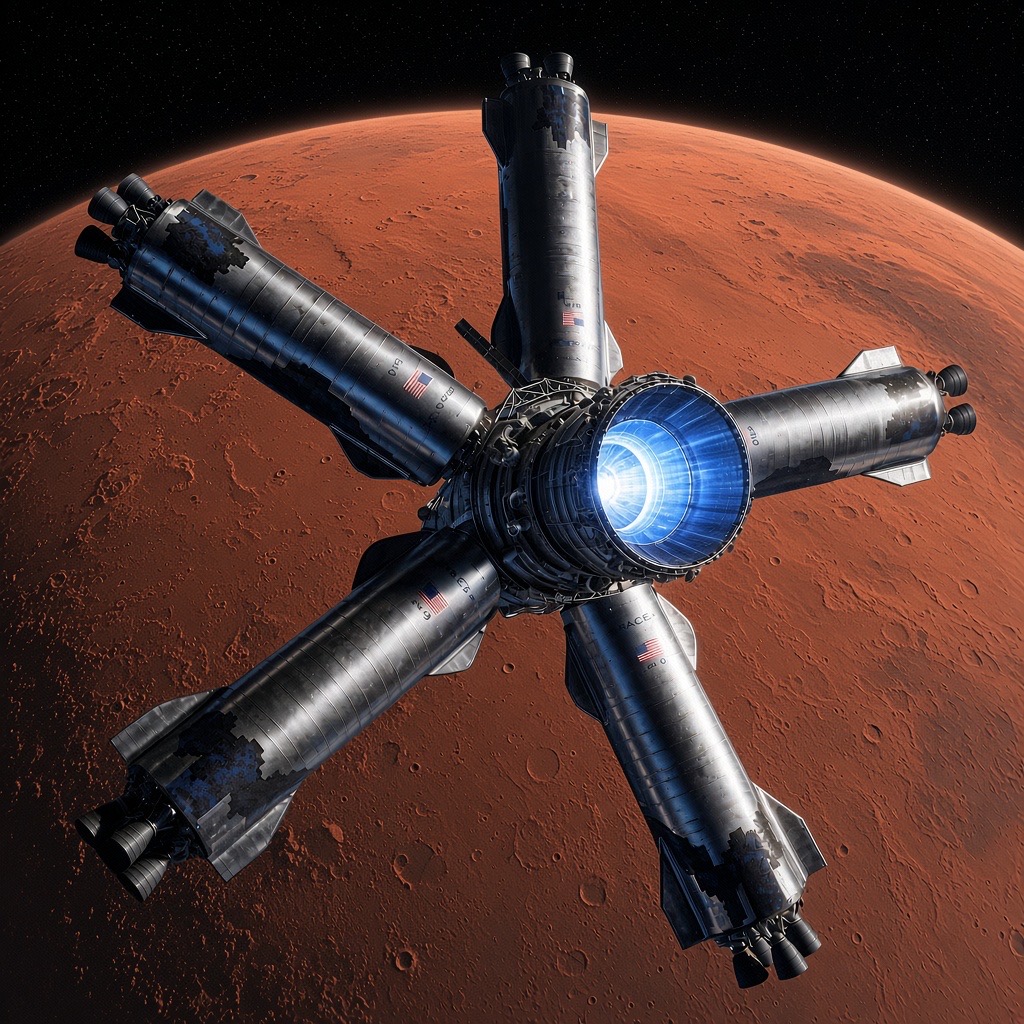
Five phases, one continuous flow. The identical sequence applies to both the Moon and Mars — differing only in propulsion choice and transit duration.
- Phase 1
Earth Departure
The complete stack launches, docks, spins up for artificial gravity, and performs the departure burn using the hub propulsion system.
- Phase 2
Transit
Crew lives in continuous artificial gravity. All systems — life support, communications, experiments — remain fully operational.
- Phase 3
Destination Orbit
The complex captures into orbit. The hub remains as a permanent station. The five ships undock.
- Phase 4
Surface Operations
Each ship performs a standard entry, descent, and landing. Upon touchdown they function immediately as habitats, cargo depots, robot bases, or power plants.
- Phase 5
Return
Ships launch from the surface, rendezvous with the orbital hub, re-dock, and the hub propulsion system returns the stack to Earth.
Methalox hub propulsion. Short transit. Rapid cadence between Earth orbit and the lunar surface.
Nuclear thermal hub propulsion. Long transit under continuous artificial gravity. Identical flow, extended duration.
None of this requires an invention.